7 Reasons to Fall in Love with Budapest
My love for this city is like love for a person — unconditional. I just love it, that’s all. It’s my second home, and I could talk about it — and show it to you — endlessly. But even setting my bias aside, Budapest deserves to be loved by everyone. There’s a reason it keeps appearing on every “best cities” list out there. Here are at least seven reasons it’s earned its reputation.
Architecture
Budapest is often called “the Paris of the East” — and there really is something to that. Architecturally, at least, the Hungarian capital holds its own next to the French one. Just consider the neo-Gothic Parliament building, the Royal Castle, Vajdahunyad, the wealth of Empire-style buildings. And it’s worth admiring not only the houses themselves but also the local courtyards. If you’re lucky enough to join a tour of Budapest’s stairwells and entrance halls, that’s a treat in itself — some of them are genuine masterpieces.

Cinematic quality
This point follows on from the previous one. Budapest’s architecture is so distinctive that films set somewhere else are often shot here — simply because it’s cheaper. Stroll along Andrássy Avenue and you’ll feel as if you’re in Paris. Step into Gozsdu Passage and you can sink into the atmosphere of West Berlin. The Hungarian capital is like a mosaic assembled from the most beautiful and striking corners of Europe. And yes — since Hollywood (and not only Hollywood) shoots here constantly, on a casual walk through Budapest you might quite easily bump into a film star or two.
Thermal baths
Hungary’s capital is also the capital of thermal bathing. The most famous baths are Gellért, Széchenyi, Rudas, and Lukács. They differ in their level of luxury, style, and atmosphere, but in principle each of them is worth visiting. Gellért is perhaps the most glamorous. Széchenyi is the most party-friendly — on weekends it even hosts proper spa parties. Rudas offers a stunning view of the city. And Lukács is the most “local” — here you’ll feel like a Budapester yourself. But excellent relaxation, restoration, and unusual sensations are guaranteed at all of these unmissable places.

Culture and history
Budapest, in truth, is a whole mix of cultures. Yes, Hungary remains a very monolithic nation-state. But its history has woven so many threads together — and that mix is felt sharply in the capital. Different details will remind you that these lands lived through Mongol invasion and Ottoman occupation, the Austro-Hungarian Empire, and a Communist past. Be sure to ride the yellow line — Budapest’s metro is the oldest on the European continent — and travel back more than a hundred years in a single journey. Get lost in the narrow streets of the Jewish Quarter. Touch the symbolic “bullets” embedded in the wall of the building opposite Parliament — their number corresponds to the number of people shot from the surrounding rooftops by the secret police during Hungary’s own Maidan: the Hungarian Revolution of 1956. Feel your heart tighten at the Holocaust memorial on the Danube embankment. There aren’t many cities in which the sense of history, and of cultural belonging, hits this powerfully.

Bridges
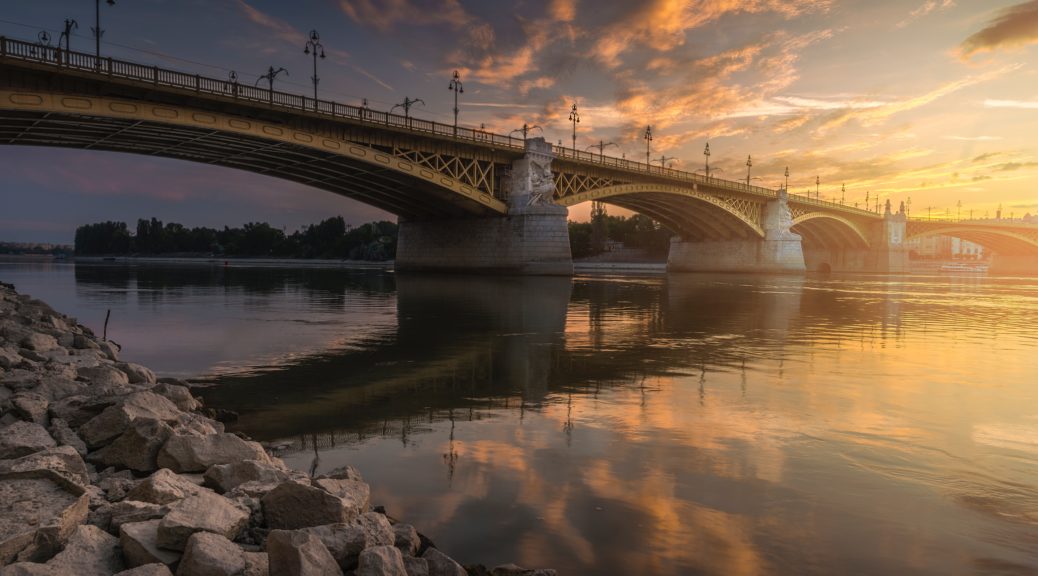
Bridges here aren’t just utilitarian structures. Without them, in fact, there would be no Budapest: the city was founded in 1873 precisely by uniting hilly Buda and flat Pest with a bridge. Several more have been built since, with new ones still on the way. You should walk across at least two: the famous Chain Bridge — the one decorated with the lions you so often see in Budapest photographs. And Margaret Bridge, which offers a fantastic view of Parliament, the Fisherman’s Bastion, and Buda Castle.

Ruin pubs
This is something you simply have to see and feel for yourself. The most famous one — Szimpla Kert — is sometimes called the mother (or father?) of all ruin pubs in the world. What is a ruin pub? The phenomenon is fairly young — it took shape around the early 2000s. The city centre had many empty buildings whose owners couldn’t afford full renovation, so an alternative idea was born: with minimal funds and maximum youthful enthusiasm, turn them into spaces where you can have a cocktail or a snack, listen to music, watch a film, or visit an art exhibition. The result: today, “bars on the ruins” are one of Budapest’s most distinctive draws.

Food
No, it isn’t spicy. But yes, it often is rich. And yes, Hungarians really do love meat and paprika. But all of this is genuinely delicious — even if, in principle, you prefer purely healthy eating. Here, it’s worth relaxing and giving yourself permission to try gulyásleves, csirke paprikás, lángos, and all the other local treats — you only live once. And when simple Hungarian cooking starts to feel familiar, remember that Budapest has several Michelin-starred restaurants. Going hungry is, frankly, not an option.