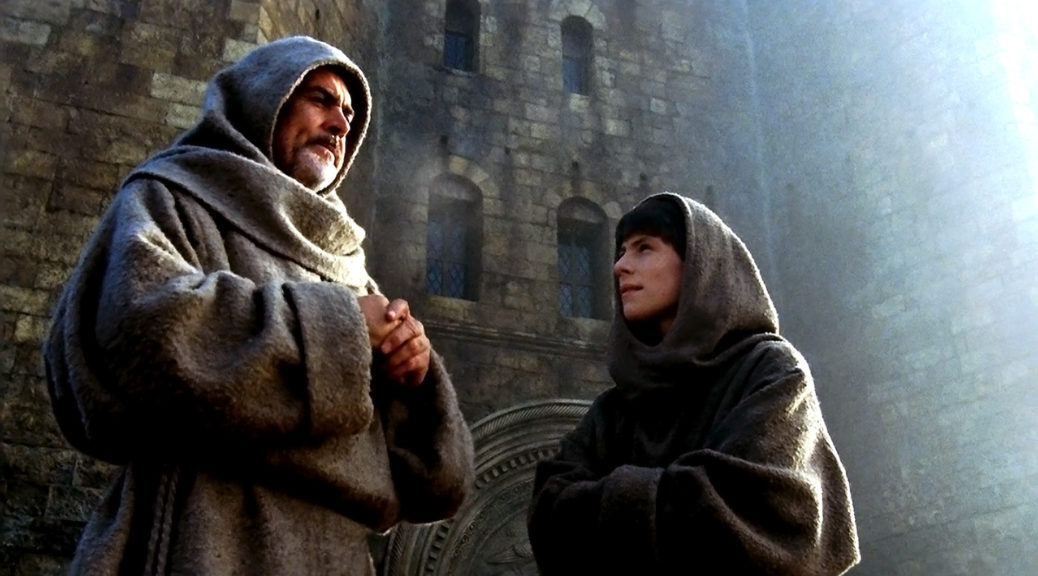
My Favourite Books, circa 2008
I put this list together back in 2008, on LiveJournal. Reading it again now, I still completely agree with some entries, and want to argue with my younger self about others — especially her ironic asides about women writers. But I deliberately haven’t changed anything of substance: let the list stand as it was — a portrait of me in my early twenties, drawn through the books I loved then. I’ve only lightly cleaned up the language so it reads more smoothly.
Someone was running a poll on this topic on Facebook the other day, and I remembered I’d once tried to put together a similar list — back in the good old days of LiveJournal. I went back to look at it, and was a bit surprised in places. A couple of books I barely remember now; another couple I’d cross out. About five more were one-hit wonders that just happened to land at that particular moment… But on the whole, it checks out: most of these books shaped who I became.
I should probably edit and update the list one day. For now, I’ll just leave it here, with my comments from back then:
1. Umberto Eco. The Name of the Rose (an undisputed favourite; you could say it’s because of this book that I went to university — and honestly, it changed the course of my life)
(from here on, not in order of importance, just as it comes to mind)
2. Thornton Wilder. The Bridge of San Luis Rey (there’s an idea in it that keeps coming back to me)
3. Jorge Luis Borges. The Book of Imaginary Beings (I love all of Borges, really)
4. F. Scott Fitzgerald. The Great Gatsby (this is the book that used to make me cry; I should track down the film — Redford as Gatsby is perfect)
5. Ernest Hemingway. The Sun Also Rises (one of those life-defining books)
6. H.G. Wells. The Door in the Wall (I’ve also been looking for it ever since I was a child)
7. Michel Houellebecq. The Elementary Particles (probably the most recent entry on my list of life-shaking literary works; a terrible and beautiful book at once)
8. John Steinbeck. The Winter of Our Discontent (strange — none of his other work landed for me, but this novel I quoted to pieces; “the words ‘son of a bitch’ can only offend a man who has doubts about his mother” — that’s from here; and the plot itself… I love these moments of self-definition)
9. Choderlos de Laclos. Dangerous Liaisons (no matter how much Hollywood adaptations may have cheapened it, in my view it’s a landmark book — also about the limits of what’s permissible)
10. Alessandro Baricco. Ocean Sea (I’m going to download it and re-read it, but as far as I remember, this particular novel of his is written to the rhythm of the ocean’s sound)
11. Selma Lagerlöf. The Ring of the Löwenskölds (I’ve already confessed that as a child I used to read the Karelian-Finnish epic Kalevala — and this is a novel from Swedish life; no matter how often people tell me Northern Europeans are dull, I find them delightful)
12. Gabriel García Márquez. One Hundred Years of Solitude (I remember finding his meditative fantasies a bit of a slog, but for some reason they keep resurfacing in my memory)
13. Hunter S. Thompson. Fear and Loathing in Las Vegas (perhaps I should take up gonzo journalism)
14. Iris Murdoch. The Black Prince (I confess I don’t even remember what it’s about, but I do remember what I took away from it)
15. Somerset Maugham. The Moon and Sixpence (this is the one about Gauguin, isn’t it? Gauguin has always been one of my heroes)
16. George Orwell. 1984 (I remember it being bound together with another dystopia by, I think, a Russian writer; instructive)
17. Hermann Hesse. Siddhartha (I read it in one sitting, in a few hours; the catharsis was powerful, and I was never quite the same again; that said, I haven’t been able to finish anything else by Hesse — too dull)
18. Arturo Pérez-Reverte. The Flanders Panel (I love a good detective novel — especially a clever one)
18. Sébastien Japrisot. A Woman in the Mirror (a master of cinematic detective stories with flashbacks; I wish I could write like that)
20. Vladimir Nabokov. Speak, Memory (this brilliant weaver of rich Russian prose isn’t only about Lolita — from his pen came multicoloured literary tapestries of utterly unique patterns)
21. Françoise Sagan. The Heart-Keeper (I remembered her mainly so the list would have more women on it — though I do think women aren’t very good at writing)
22. Gustave Flaubert. Madame Bovary (essentially, a practical handbook on typical female neuroses)
23. Oscar Wilde. The Picture of Dorian Grey (a dream)
24. Irvine Welsh. Eurotrash (raw and brutal)
25. Mikhail Bulgakov. The Master and Margarita (no comment needed here, I think)
26. Milan Kundera. The Unbearable Lightness of Being (probably the best portrayal of the different ways the human body can be perceived; I’m firmly on the male protagonist’s side, not the heroine’s)
27. Daniel Keyes. Flowers for Algernon (science fiction at its most terrifying)
28. Miguel de Cervantes. Don Quixote (I fully agree with Dostoevsky — or whoever it was — who said that if humanity were ever required to justify itself at the Last Judgment, this book could serve as its defence)
29. Emily Brontë. Wuthering Heights (off to find the film adaptation — as far as I remember, it’s beautiful)