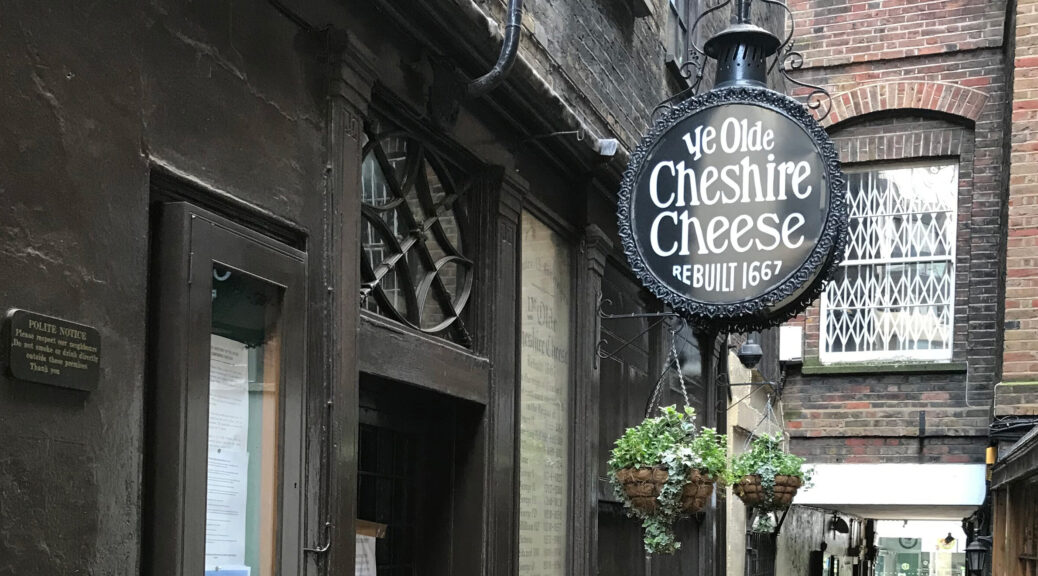
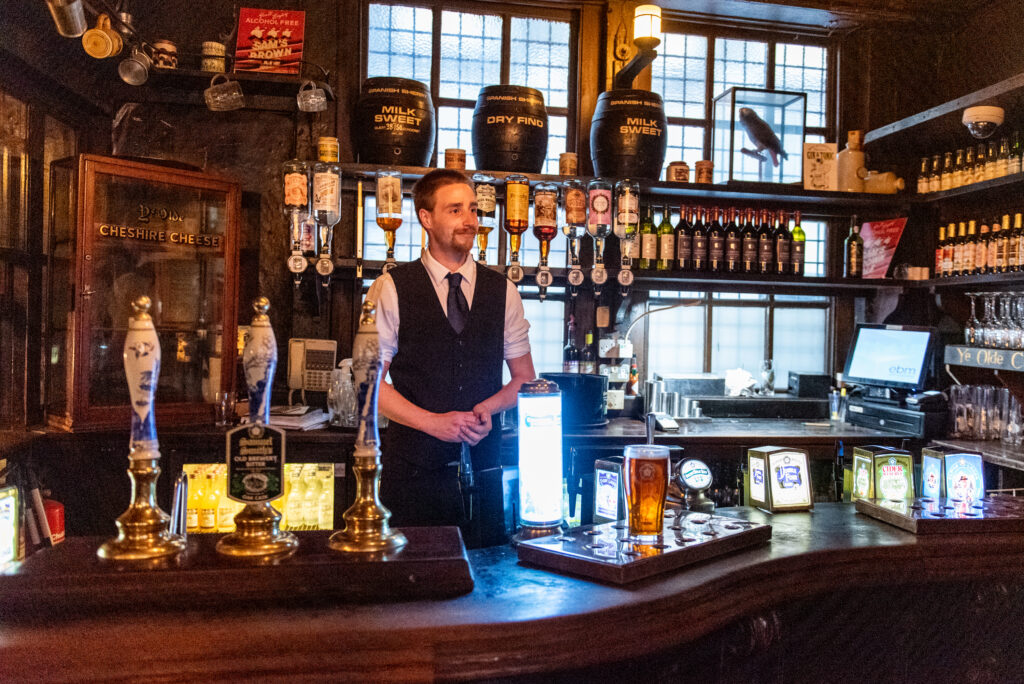
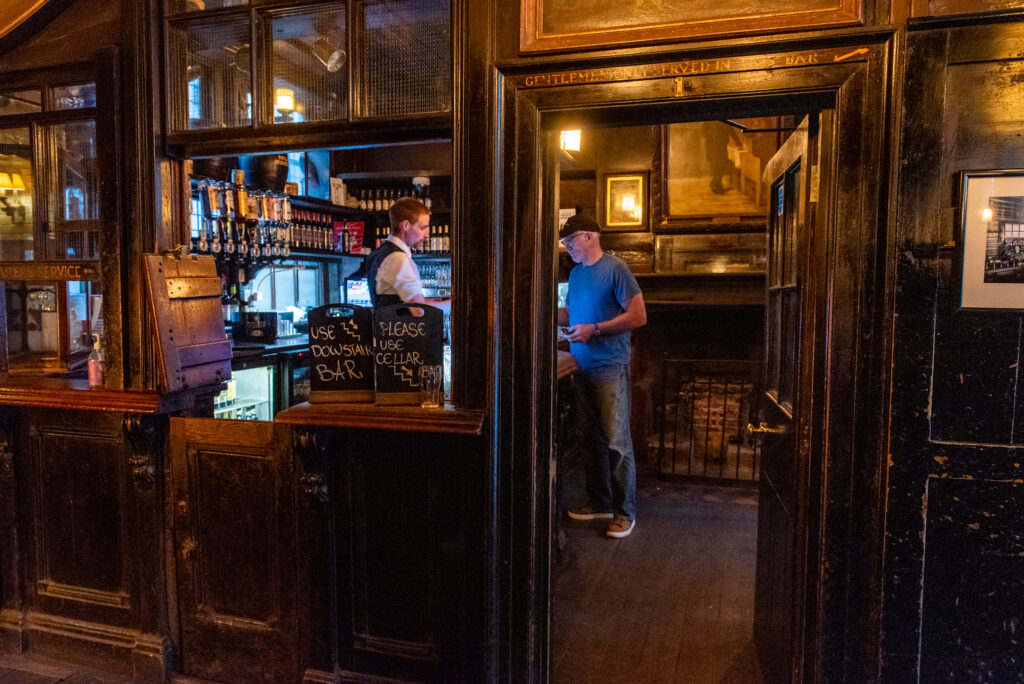
Nestled in a quiet alley off Fleet Street, Ye Olde Cheshire Cheese is one of London’s most iconic pubs, brimming with history and literary charm. Rebuilt in 1667 after the Great Fire of London, the pub stands as a Grade II listed building with roots reaching back even further — to 1538. Though several London pubs claim to be the oldest, Ye Olde Cheshire Cheese holds a unique position in the city’s history, known not only for its longevity but also for its intriguing, sometimes shadowy, atmosphere.
A Historic Gem with Ancient Origins
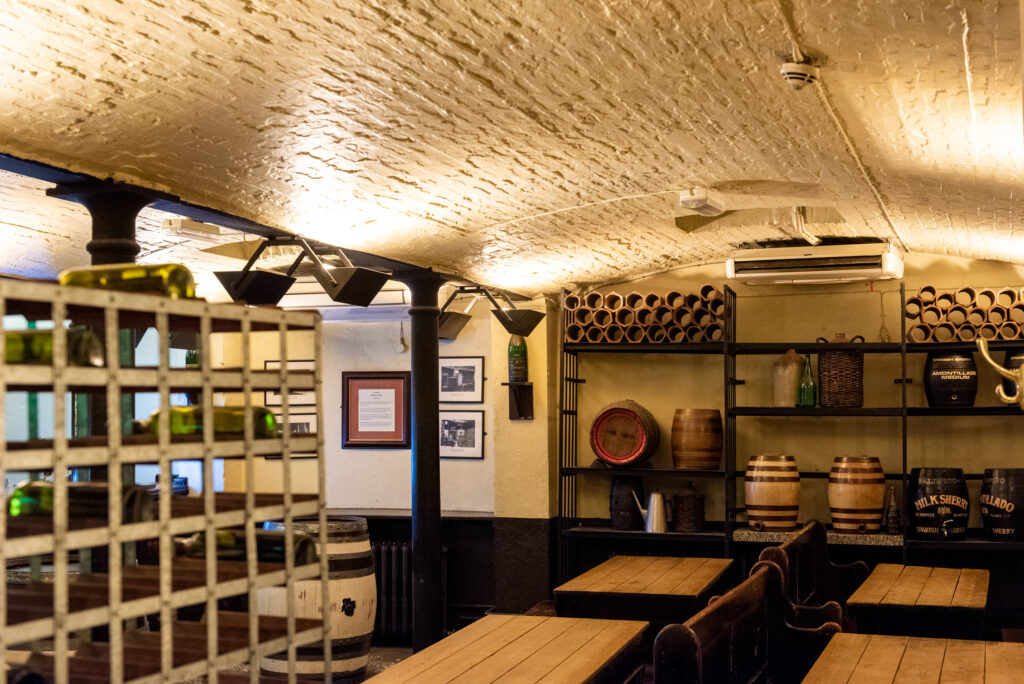
Ye Olde Cheshire Cheese has been a constant on Fleet Street, attracting a mix of locals, travelers, and notable patrons for centuries. Although the current building was reconstructed after the fire, its foundations are believed to date to the 13th century, when the site was home to a Carmelite monastery. The vaulted cellars below the pub, dark and cool, are thought to be remnants of this religious structure.
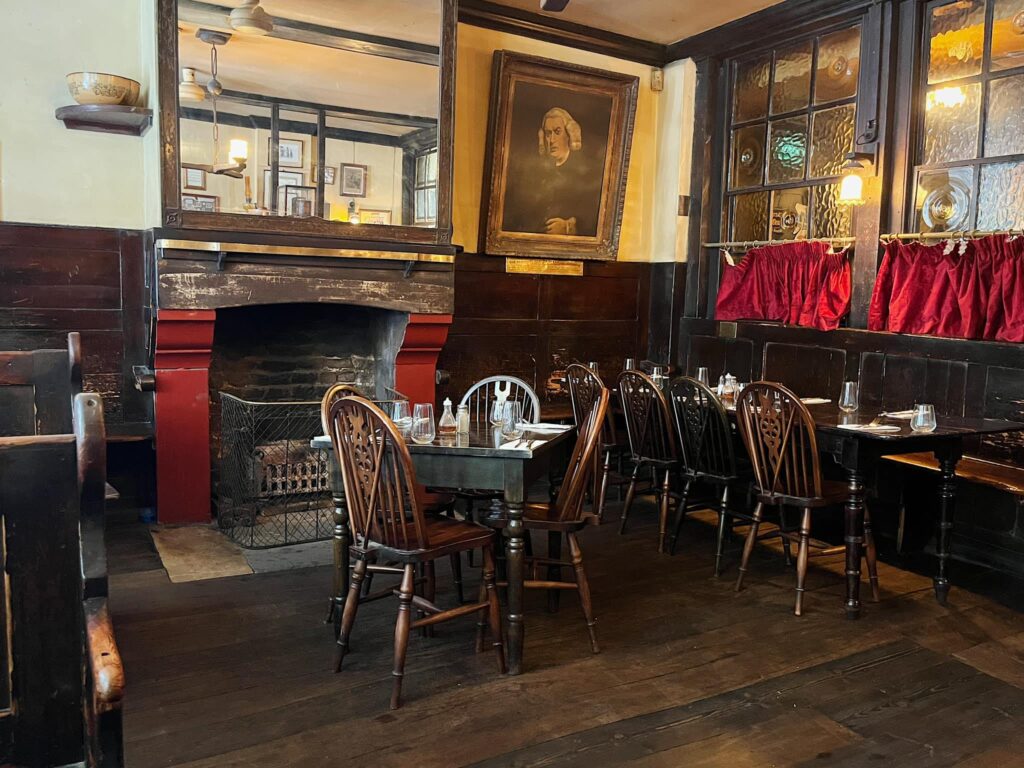
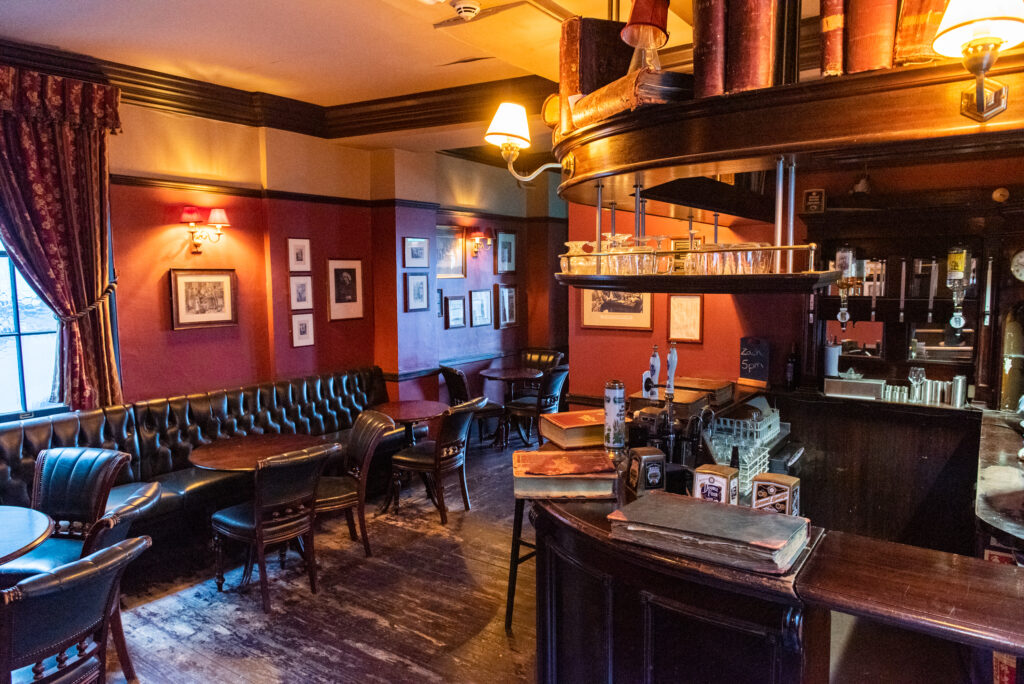
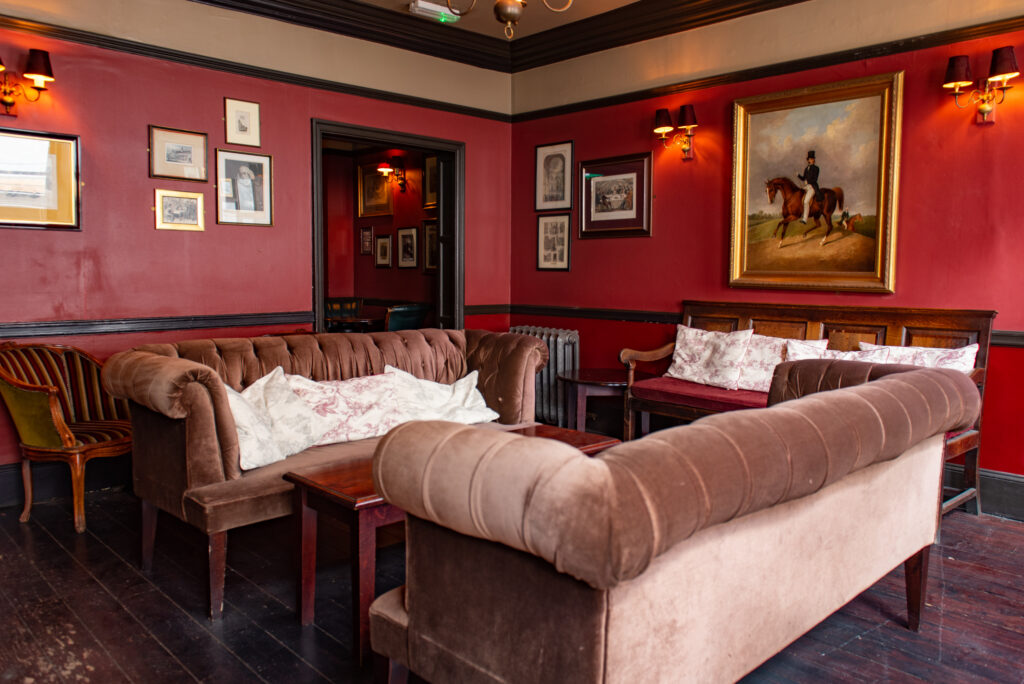
The pub’s interior offers a glimpse into London’s past. Its wooden paneling — some of which is original or dates back to the 19th century — and the lack of natural light create a mysterious, almost eerie, ambiance. The maze of small, dimly lit rooms and bars gives the impression of stepping back in time. During the colder months, the warmth from its open fireplaces makes it an inviting escape from the winter chill.
Literary Legends at the Pub
While Ye Olde Cheshire Cheese is known for its historic setting, it is perhaps even more famous for its literary connections. The pub was a favored haunt of writers and intellectuals, particularly during the 19th and early 20th centuries, and remains a landmark for literary enthusiasts today.
Charles Dickens is said to have been a regular patron, and his presence is felt in the pub’s connection to A Tale of Two Cities. After a court case, the character Sydney Carton leads Charles Darnay through Fleet Street and into a tavern that bears a striking resemblance to the Cheshire Cheese. In his personal life, Dickens often frequented the establishment, seeking its familiar and comforting atmosphere.
The pub also hosted other famous writers, including G.K. Chesterton, Mark Twain, Alfred Tennyson, and Sir Arthur Conan Doyle.
The walls of the pub are adorned with plaques commemorating these literary figures, their presence lingering like the pub’s long history itself.
A Pub of Tales and Legends
The Cheshire Cheese also has its share of legends and unusual stories. A ballad from 1680 titled “A New Ballad of the Midwives Ghost” tells a tale of a midwife who haunts a house near the pub until the bones of children she buried are unearthed. The ballad claims that the bones were displayed at the Cheshire Cheese as proof of the haunting.
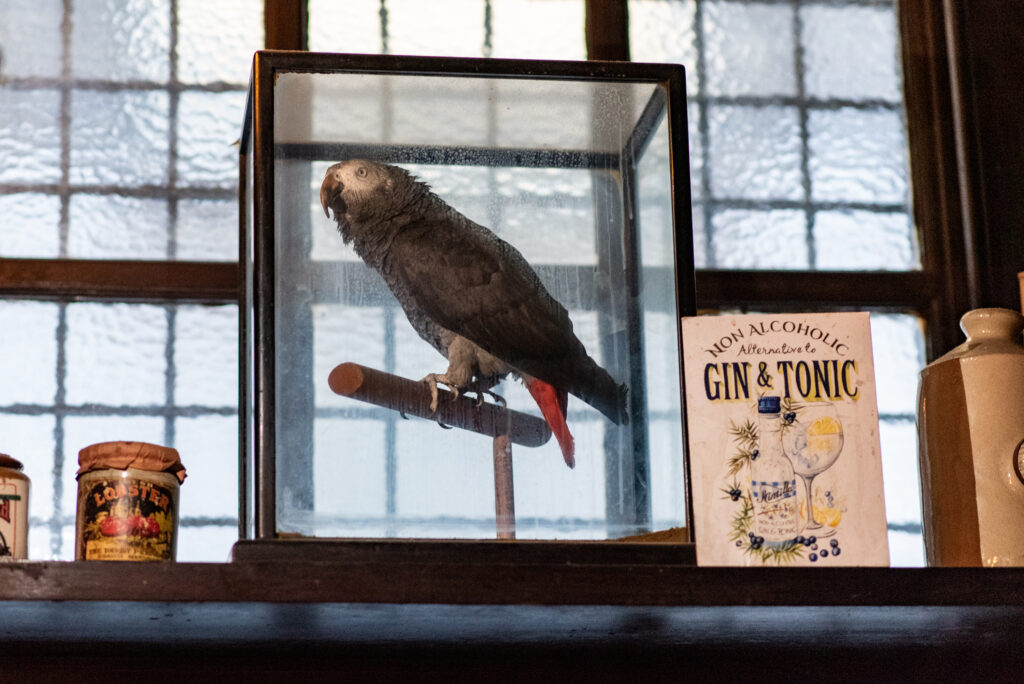
Further adding to its lore, the pub was home to Polly the Parrot, a grey parrot whose death in 1926 made headlines around the world. Obituaries appeared in newspapers as far away as the U.S., and the story was broadcast on London’s radio station 2LO.
The pub also played a role in the founding of the Medical Journalists’ Association, whose first meeting took place in the establishment in 1967, establishing it as a gathering spot for thinkers and professionals alike.
A Setting for Fiction and Real Life
Ye Olde Cheshire Cheese has not only been frequented by writers but has also appeared in their works. In addition to Dickens’ reference in A Tale of Two Cities, the pub is mentioned in R.L. Stevenson’s The Dynamiter and Anthony Trollope’s Ralph the Heir, where one character is noted for speaking passionately in support of unions at a debating club within the pub. Agatha Christie’s detective Hercule Poirot dined at the pub in The Million Dollar Bond Robbery, savoring its famous steak and kidney pudding.
Hidden Secrets and Intrigues
The Cheshire Cheese has also been linked to some more scandalous stories. In 1962, the pub donated a collection of erotic plaster tiles to the Museum of London. Discovered in an upper room, the explicit images suggest that the room may have been used as a brothel in the 18th century, adding another layer of intrigue to the pub’s long and storied history.
A Living Piece of History
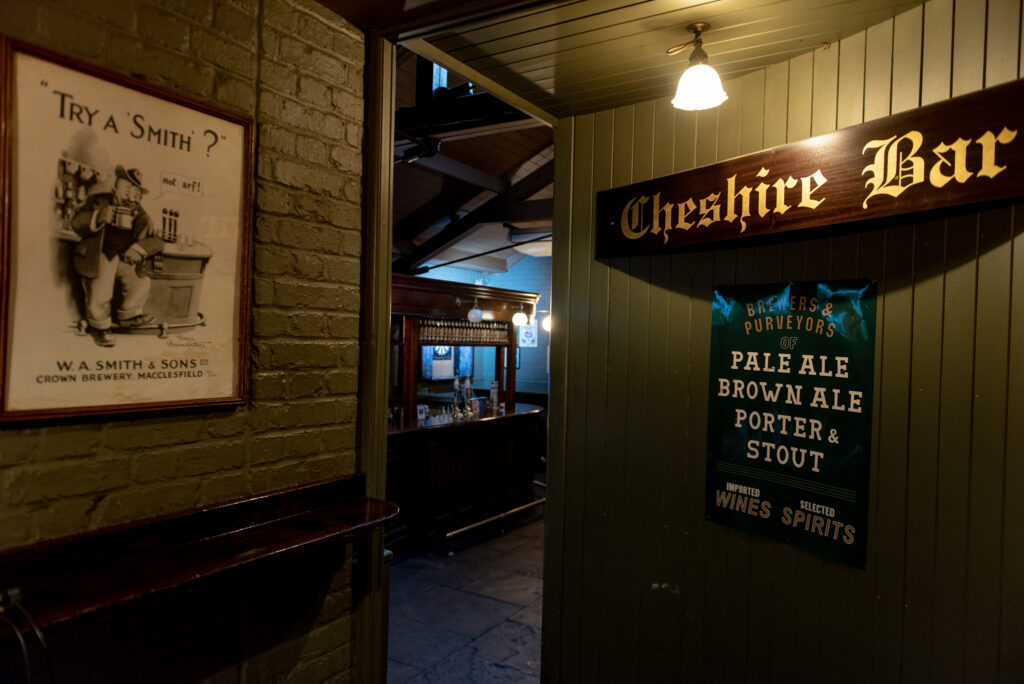
Today, Ye Olde Cheshire Cheese is owned and operated by Samuel Smith Old Brewery, keeping its historic essence alive for new generations to experience. It’s a member of the Campaign for Real Ale’s National Inventory of Historic Pub Interiors, recognized for maintaining its authentic character in a city that has seen significant modernization.
Visitors today can enjoy the same dark, winding rooms and old-world charm that once captivated some of the most celebrated writers in history. Its rich literary legacy, combined with its atmospheric interior and centuries-old traditions, makes Ye Olde Cheshire Cheese a must-visit for anyone interested in history, literature, or simply a unique London pub experience.
When did I first go somewhere alone? As far as I remember, it was a trip to Germany on a paragliding trip. Back then – about 12 years ago – it wasn’t as easy to go abroad as it is now, and not many of my friends went. And not only because there was no money – it’s hard to remember now, but back then you had to get a visa for that, and it was very difficult. At that time, I had both the first and the second. Plus, theoretically, friends were waiting for me there, albeit only virtually, but like-minded people. And most importantly, I really wanted to go to this event, so it wasn’t scary – the desire overcame any fears.
I remember staying in an apartment in Berlin with a cool host through Couchsurfing. And at the airport I lived in a tent – which is usually unacceptable for me, but there were great showers and toilets nearby in the terminal, so it was very comfortable. And one day I flew back and forth from East Germany to West Germany – to see a classmate in Cologne. Overall, the trip was great.
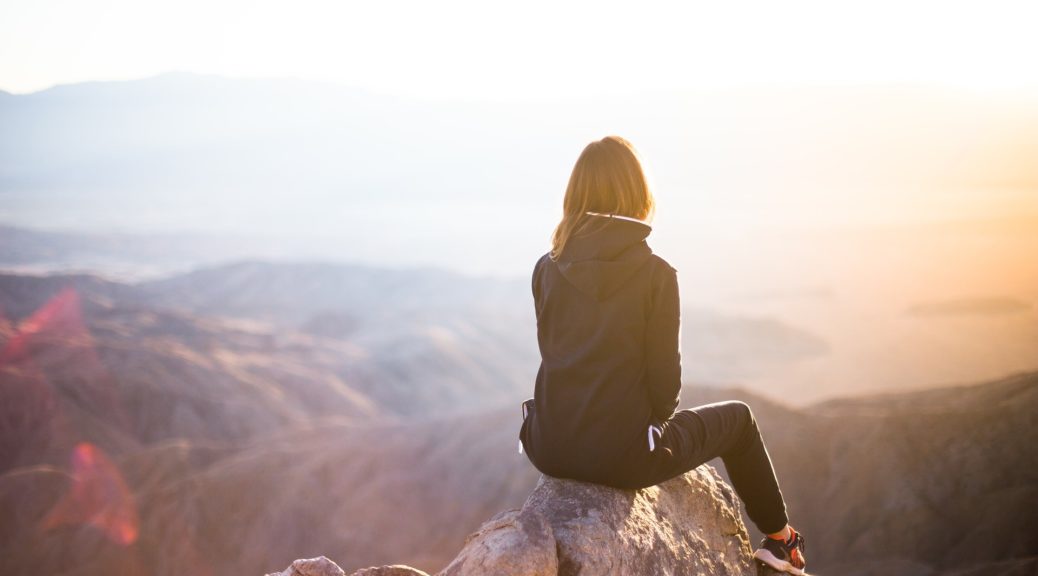
That’s where it all started, and then there was no stopping me: now solo travel is my love. Yes, of course, traveling with someone, especially with a loved one, is also wonderful. But, I think, even if I have a family, I will always go somewhere alone, at least sometimes. And here’s why.
Top 5 benefits of solo travel
1. No need to adjust. No need to wait for someone to have a vacation or weekend. Discuss whether you like the chosen accommodation option or not. And so on.
2. It follows from the first: even at the last moment you can choose a cheaper flight option – not for the dates that suit someone, but for those when there are options at a low price. Tip: after you have decided on a trip, simply select the option to track ticket prices for a month on Skyscanner, turn on email notifications about changes, and stop as soon as these prices suit you. Almost always, you can grab an option that costs about the same as tickets purchased in advance (which is the most effective way to buy cheaper).
3. Rest from your surroundings. Agree, even your most beloved half can sometimes get tired. And even the coolest friends and, sorry, even children, sometimes get tired. The opportunity to briefly break out of your circle is priceless.
4. Freedom of choice. When you don’t have to adjust to anyone’s rhythm and tastes during your trip, it’s simply fantastic. You can plan your day however you want: run around the sights in a “get-to-get-everything” rhythm, or, on the contrary, spend half the day in bed. You can walk fast or slow. You can’t go three times a day, but whenever you want. The possibilities are endless.
5. Getting to know yourself. Usually, most of us rarely come face to face with our own “self.” And even when we’re alone, we often continue to have internal dialogues with the people around us. Solo travel is a great opportunity to try to communicate only with ourselves. Yes, of course, you can’t stay alone here either: meet new people, continue to communicate with those who stayed at home. But ideally, try to give up everything and everyone and feel like, for example, the hero of a travel movie. Just imagine: you are in a place where no one knows your name and most likely doesn’t even speak your language. You can be whoever you want. Play this game.
Top 5 Disadvantages of Traveling Alone
1. It’s expensive. Yes, our world is still designed for at least two. The cheapest hotel rates are not for single rooms, but for double rooms. And the former are not always even provided for in principle! When traveling somewhere with a group, you can save even more, for example, by renting an apartment on Airbnb: if you divide its cost among several people, it will be cheaper than any hotel. When renting an apartment alone, you pay the full price yourself. The same applies, for example, to renting a car.
2. Potential danger. I have not yet had to face any safety problems when traveling solo, but logic suggests that it may be easier to cope with a problem with someone than alone. You don’t even need to imagine any extraordinary situations. Let’s say you get sick or sprain your ankle. Of course, it will be easier to cope when there is someone close to you.
3. Full responsibility. When traveling with someone, you usually divide responsibilities in one way or another. For example, someone is responsible for choosing accommodation. Someone organizes leisure activities, and so on. If something goes wrong, you can always file a claim with your partner and wait for the problem to be resolved by the other. When traveling alone, you will have to do everything exclusively on your own.
4. Lack of photos. Yes, yes, for some this may be a decisive factor: on a solo trip there will be no one to take pictures of you. Well, unless you cling to the appropriate request from passers-by. But usually a solo trip is a lot of photos from the trip itself, but almost all of them are without you. Except for selfies, of course.
5. Loneliness. There are people for whom solo traveling is contraindicated. These are people who are simply afraid, do not know how or do not like to be alone with themselves – there are such people. Yes, of course, on any trip you will encounter other people in one way or another. You can always meet and chat with someone new. But if you are not very comfortable being alone – of course, it is better not to even try.
Safety Rules
Take care of the organization. In fact, I personally love this: going wherever your eyes see, stopping for the night where you like. But it is usually more expensive than the option with a pre-booking. And, in my opinion, it is more suitable for traveling not alone. When going somewhere solo, it is still better to choose in advance where you will live, check the chosen option, and share information with loved ones who are staying at home. Let them have all the information about the route of your trip, the places where you will be at each moment of time, etc.
Plan transfers. The more carefully you organize everything in advance, the greater the guarantee that the trip will go great. Remember: in the process, there will be no one but you to solve problems.
Prepare backup options. You should always have a “plan B”, alternative payment methods, etc. Again: when traveling solo, you will be in “no one but you” mode.
Stay in touch. The only real help you can count on is probably help from home. Make sure you can get it: make sure you have a phone line and/or internet access from where you will be.
Take precautions. Don’t be paranoid – but always be skeptical. Some solo travel articles even say “don’t drink alcohol.” There’s really no need to go to extremes. Yes, you can’t dive solo. And you can’t get in the water after drinking alcohol. But basically, you can do the same things when traveling alone as you would on any other trip. Just keep an eye on things, don’t get too relaxed, don’t hang out with suspicious strangers, and you’ll be fine.
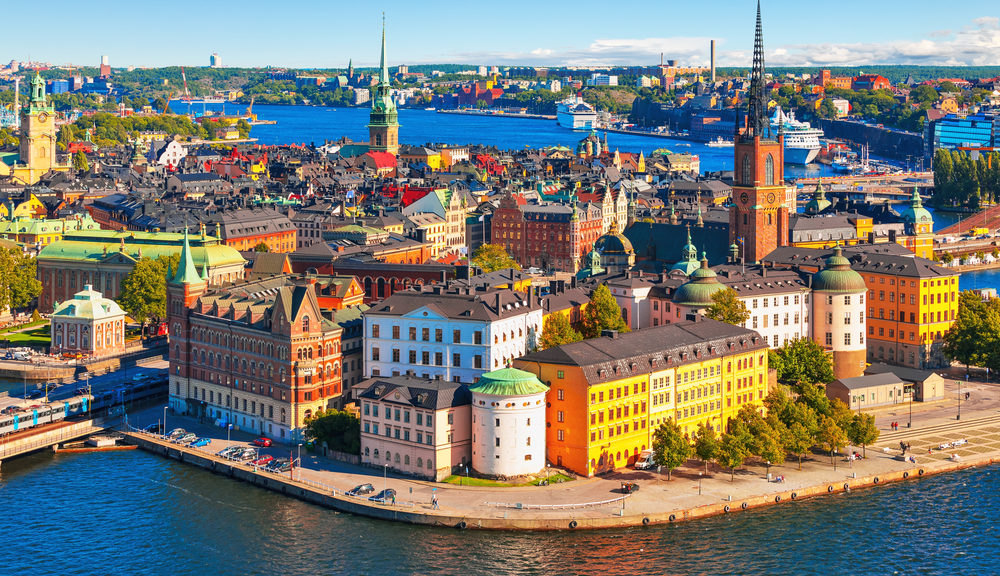
I’d wanted to come here ever since reading the Millennium trilogy — it was simply too gripping and cinematic to resist. Then came the screen adaptations of the Lisbeth Salander novels, and the urge only grew stronger. But there was always something else, or I was being pulled somewhere else entirely. Until, in the summer of 2019, I had a thought (this is exactly how my best journeys are born): where might I see Midsommar — the Summer Solstice festival? It tends to be celebrated most vividly in Northern countries. The choice was between Norway and Sweden. Since direct flights, for now, only run to the latter, the answer became clear: time to head to Stockholm… And so I finally made it to the home of one of my most beloved literary universes.
How do we fall in love with a particular book? Literary “butterflies in the stomach” are born at the moment when you’re fully immersed in the atmosphere of the work, when you want to say “I believe!”, and a thought slips in unbidden: I should have written this. That’s how it was for me with Stieg Larsson’s books.
The author, who died untimely young, had reportedly intended to write not a trilogy about Lisbeth Salander but as many as ten novels. There are even said to be drafts of some kind. And perhaps one day someone will rework them… But we all understand: no one can continue the story the way the real author could.
So all that’s left is to re-read what we have, re-watch the adaptations — and wander Stockholm, recognising the places we’d mentally followed the characters through in The Girl with the Dragon Tattoo, The Girl Who Played with Fire, and The Girl Who Kicked the Hornets’ Nest.
The working-class districts
At the heart of Larsson’s novels are two main characters: that mysterious, extravagant, extraordinary hacker Lisbeth Salander, and the journalist Mikael Blomkvist. It’s commonly held that Blomkvist was modelled on the author himself — also an investigative journalist, who died suddenly at what is, by Swedish standards, a young age of 50. There are theories that this death wasn’t entirely natural…
Stieg Larsson himself lived in the Stockholm district of Södermalm — or simply Söder. Historically, this was where workers and people of more modest means settled. The reason: on the island of Gamla (today’s heart of Stockholm — Gamla Stan), where the Swedish capital was first founded, only stone houses had been permitted from the seventeenth century onward, after a series of fires destroyed parts of the city. The poor couldn’t afford this — wooden buildings were their lot. So they had to move further south, to the island of Söder (then known as Åsön).
Today Södermalm is an eclectic district right in the centre of the Swedish capital, home to many landmarks, museums, restaurants and the rest. It was also where Stieg Larsson lived — and worked, as editor-in-chief of the political magazine Expo.
And it was here, too, that he set the homes of his beloved characters: Lisbeth Salander bought herself a 21-room penthouse at Fiskargatan 9, while Mikael Blomkvist’s apartment was at Bellmansgatan 1, not far from the Adat Jisrael Synagogue and the Stockholm Mosque.
Where the wealthy live
Larsson placed the “bad guys” of his novels on the other side of the Riddarfjärden strait — in the more affluent and glittering Östermalm. This is where the unscrupulous millionaire Wennerström from The Girl with the Dragon Tattoolives — on Stockholm’s most expensive street, Strandvägen.
Coffee and food
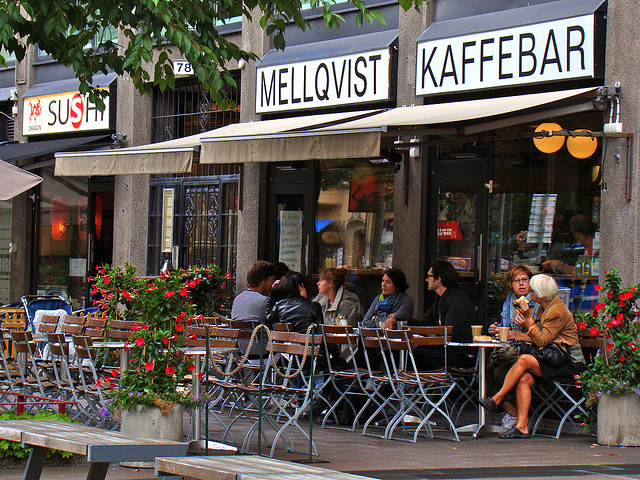
Stockholm’s lively coffee culture rests largely on the Swedish tradition of fika — socialising over a cup of coffee and something baked. Mikael Blomkvist did his “fika-ing” at Mellqvist Kaffebar, a real establishment at Hornsgatan 78 in Södermalm. Stieg Larsson himself, it’s said, could often be found working there with his laptop — the Expo offices were just nearby.
For something more substantial, the journalist-writer reportedly liked the surrounding ethnic restaurants. He used to order lamb stew, for instance, at Tabbouli, a small Lebanese tavern at Tavastgatan 22, which became the prototype for the Bosnian restaurant Samir’s Cauldron, mentioned in the third book of Larsson’s trilogy, The Girl Who Kicked the Hornets’ Nest.
For traditional Swedish cuisine — venison dishes and the famous meatballs — there’s the restaurant-pub-club Kvarnen at Tjärhovsgatan 4, where Lisbeth Salander used to meet the members of her fictional all-girl band, Evil Fingers.
Social and cultural undercurrents
Larsson’s books are interesting not only for their detective plots and rapidly unfolding storylines. They are also full of references to the moods and phenomena that mark contemporary Sweden. And of reminiscences from the past. All the more reason to keep unpicking the threads of his novels.
In the Millennium trilogy, for example, you can find a nod to the work of the great Swedish writer Astrid Lindgren — Lisbeth Salander, after all, can quite easily be read as a grown-up version of the rebel Pippi Longstocking. Perhaps she even dyes her hair black to hide a natural shade of red. And on the door of Lisbeth’s exclusive super-flat, there’s a name plate reading “V. Kulla” — practically “Villa Villekulla,” like Pippi’s house.
And Mikael Blomkvist — isn’t this Kalle Blomkvist from the children’s detective stories Lindgren wrote?
Beyond the geographical distribution of his good and bad guys around the city, Stieg Larsson was also trying to capture the social and cultural divisions and diversity of contemporary Swedish society. It’s worth noting that he himself was pro-immigration — he believed migrants were necessary to his country. And by saying so, he made enemies of those who saw foreigners arriving in Sweden as a threat. Even so, Millennium reflects a fact of modern Stockholm: today, around 25% of the city’s residents are either recent migrants themselves or descendants of those who arrived earlier.
He was apparently planning to develop this theme in the further books of the series — of which there were meant to be ten. Instead, he left behind only three bestsellers.
My love for this city is like love for a person — unconditional. I just love it, that’s all. It’s my second home, and I could talk about it — and show it to you — endlessly. But even setting my bias aside, Budapest deserves to be loved by everyone. There’s a reason it keeps appearing on every “best cities” list out there. Here are at least seven reasons it’s earned its reputation.
Architecture
Budapest is often called “the Paris of the East” — and there really is something to that. Architecturally, at least, the Hungarian capital holds its own next to the French one. Just consider the neo-Gothic Parliament building, the Royal Castle, Vajdahunyad, the wealth of Empire-style buildings. And it’s worth admiring not only the houses themselves but also the local courtyards. If you’re lucky enough to join a tour of Budapest’s stairwells and entrance halls, that’s a treat in itself — some of them are genuine masterpieces.
Cinematic quality
This point follows on from the previous one. Budapest’s architecture is so distinctive that films set somewhere else are often shot here — simply because it’s cheaper. Stroll along Andrássy Avenue and you’ll feel as if you’re in Paris. Step into Gozsdu Passage and you can sink into the atmosphere of West Berlin. The Hungarian capital is like a mosaic assembled from the most beautiful and striking corners of Europe. And yes — since Hollywood (and not only Hollywood) shoots here constantly, on a casual walk through Budapest you might quite easily bump into a film star or two.
Thermal baths
Hungary’s capital is also the capital of thermal bathing. The most famous baths are Gellért, Széchenyi, Rudas, and Lukács. They differ in their level of luxury, style, and atmosphere, but in principle each of them is worth visiting. Gellért is perhaps the most glamorous. Széchenyi is the most party-friendly — on weekends it even hosts proper spa parties. Rudas offers a stunning view of the city. And Lukács is the most “local” — here you’ll feel like a Budapester yourself. But excellent relaxation, restoration, and unusual sensations are guaranteed at all of these unmissable places.
Culture and history
Budapest, in truth, is a whole mix of cultures. Yes, Hungary remains a very monolithic nation-state. But its history has woven so many threads together — and that mix is felt sharply in the capital. Different details will remind you that these lands lived through Mongol invasion and Ottoman occupation, the Austro-Hungarian Empire, and a Communist past. Be sure to ride the yellow line — Budapest’s metro is the oldest on the European continent — and travel back more than a hundred years in a single journey. Get lost in the narrow streets of the Jewish Quarter. Touch the symbolic “bullets” embedded in the wall of the building opposite Parliament — their number corresponds to the number of people shot from the surrounding rooftops by the secret police during Hungary’s own Maidan: the Hungarian Revolution of 1956. Feel your heart tighten at the Holocaust memorial on the Danube embankment. There aren’t many cities in which the sense of history, and of cultural belonging, hits this powerfully.
Bridges
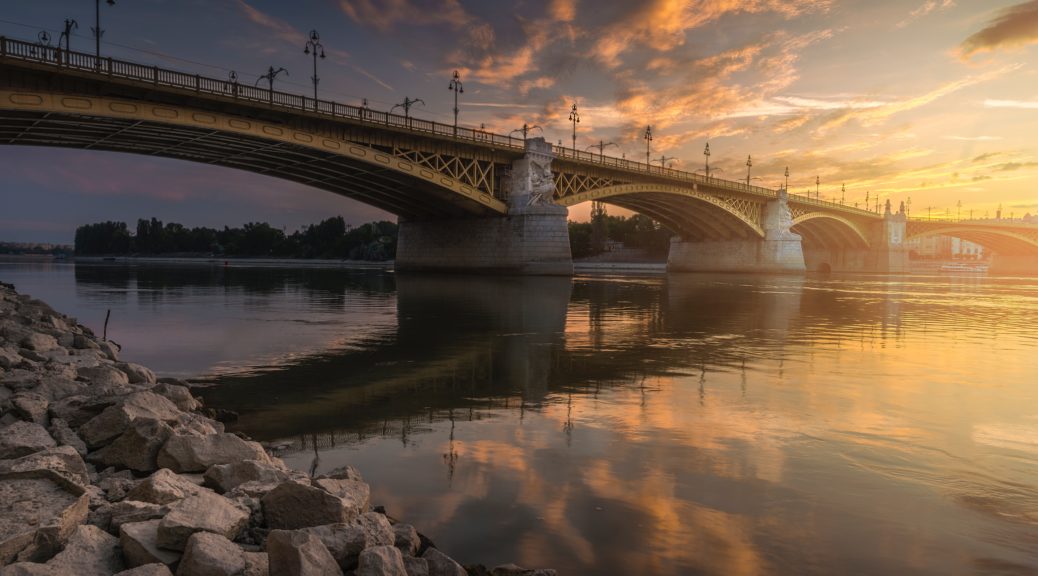
Bridges here aren’t just utilitarian structures. Without them, in fact, there would be no Budapest: the city was founded in 1873 precisely by uniting hilly Buda and flat Pest with a bridge. Several more have been built since, with new ones still on the way. You should walk across at least two: the famous Chain Bridge — the one decorated with the lions you so often see in Budapest photographs. And Margaret Bridge, which offers a fantastic view of Parliament, the Fisherman’s Bastion, and Buda Castle.
Ruin pubs
This is something you simply have to see and feel for yourself. The most famous one — Szimpla Kert — is sometimes called the mother (or father?) of all ruin pubs in the world. What is a ruin pub? The phenomenon is fairly young — it took shape around the early 2000s. The city centre had many empty buildings whose owners couldn’t afford full renovation, so an alternative idea was born: with minimal funds and maximum youthful enthusiasm, turn them into spaces where you can have a cocktail or a snack, listen to music, watch a film, or visit an art exhibition. The result: today, “bars on the ruins” are one of Budapest’s most distinctive draws.
Food
No, it isn’t spicy. But yes, it often is rich. And yes, Hungarians really do love meat and paprika. But all of this is genuinely delicious — even if, in principle, you prefer purely healthy eating. Here, it’s worth relaxing and giving yourself permission to try gulyásleves, csirke paprikás, lángos, and all the other local treats — you only live once. And when simple Hungarian cooking starts to feel familiar, remember that Budapest has several Michelin-starred restaurants. Going hungry is, frankly, not an option.
Airbnb: Everything You Wanted to Know but Didn’t Know Where to Ask
I wrote this piece back in 2017, when Airbnb was still young, idealistic, and genuinely felt like something built on “trust between people.” Re-reading it almost ten years later, I can see how much both the platform and my view of it have changed. So I’m leaving the original text largely as it was — as a portrait of the sharing-economy era at its peak — but I’ve added a few notes from 2026 where it really matters.
I really love all these new-fangled sharing economy businesses: Airbnb, BlaBlaCar, and the like. It’s a genuine phenomenon of the Age of Aquarius — and it’s absolutely my thing: services built first and foremost on human trust.
While picking photos for this piece — from my own Airbnb trips — I did the maths: in six years, I’ve rented places through this platform 34 times. I’d use only Airbnb if I could, but it doesn’t always have enough of what I need in every destination. For example, in the Florida Keys, almost no one rents out flats — only large villas, which were beyond both my budget and my needs as a solo traveller. Or in Bratislava, flats in the centre were inadequately overpriced, in my view. So instead I came across a hotel on a little boat — and I’d long wanted to stay on a boat… In short, when Airbnb doesn’t have what I’m looking for, the good old booking.com comes to the rescue, or — in Ukraine — dobovo.com. Disclaimer: I’m not saying these are the best services available, just that, in my experience, they’re the most convenient and well-rounded.
🔄 2026 update: Dobovo.com is still going strong and has even expanded — you can book apartments in Kyiv, Lviv, Odesa, and other Ukrainian cities. A wartime detail worth knowing: many flats now have backup power for wifi, and this is often noted in the description. Booking.com remains essentially unchanged and is still the main alternative to Airbnb in Europe.
My very first experience: an apartment in New York
It’s interesting that my introduction to Airbnb began with a scandal. Meaning, I first heard the name while reading an article about how a hostess on the platform had her flat trashed by guests. After that incident, Airbnb introduced an insurance system for such cases and several other safety measures. And I, despite the apparent bad PR, decided to give the service a go for the first time. My very first Airbnb stay was a not-very-clean but very authentic and overall lovely apartment in Brooklyn, New York.
Like in a film: a house with a pool in Los Angeles
Since then, there’s been a lot of variety: a house with a pool in Los Angeles — and an Orthodox Jewish home in Beverly Hills. A brand-new little flat in a Paris suburb called Houilles. A charming little nest with cats in Tel Aviv, and plenty more besides, including a good ten apartments across Budapest.
A small but cosy flat in Tel Aviv — beautifully located and, by Israeli standards, very reasonably priced
So it just so happens that I can probably claim to be something of an Airbnb expert by now. And I’ll be glad to share my knowledge and recommendations with you.
To start with, briefly, on how it works. As originally conceived, Airbnb is a place where flat owners list their homes for short-term rent. The idea was that people could earn something while they themselves were off travelling somewhere — why not let someone else stay at your place during that time? But the system quickly drifted from the ideal and became more commercial. Today, almost all listings on Airbnb aren’t homes someone actually lives in — they’re properties built specifically for short-term rental. That said, I’ve stayed a couple of times in places that were genuinely someone’s flat, vacated only for the duration of the rental. There’s a particular charm to those, but the “purpose-built” ones are usually much cleaner and more comfortable. After all, people have very different ideas about how a home should be set up. In permanently rented flats, things are a little more impersonal — but at the same time, designed with guests in mind.
🔄 2026 update: This shift away from “real homes” toward commercial listings has only intensified over the years — to the point where many European cities (Barcelona, Berlin, Lisbon, Amsterdam, Paris) now impose serious restrictions on short-term rentals because of their impact on the local housing market. It’s worth bearing in mind: sometimes what you’re renting on Airbnb sits in a grey zone of local law. In London, for instance, there’s a 90-day annual cap on letting an entire flat.
A cosy apartment with a sea view and superb location in Nesebar, Bulgaria
So how does the rental process work? You go to the site, choose your destination and dates, and then the place you’d like. I usually look for whole apartments (though you can also rent a room, or even something more like a bunk). Then I narrow things down by location on the map and budget. I read the details and reviews carefully. Once I’ve chosen, I send a request. If the host accepts it, I’m charged immediately — for the entire stay — and I get my booking confirmation. This, perhaps, is the one thing where Airbnb falls short of, say, Booking: you have to pay in full and upfront. You can’t just place a tentative reservation.
🔄 2026 update: This is now only partly true — Airbnb has introduced split payments: you can pay part at booking and the rest closer to check-in. The option isn’t available for all listings or dates, but it does come up regularly.
A simple but comfortable flat in Vilnius, Lithuania
A couple of important points now. Take note (Airbnb does explain and warn about this in the process, but…): if you simultaneously send requests to several flat owners and one of them approves yours before you’ve cancelled the others, you’ll be charged for every confirmed booking! So don’t do that. If you just want to ask a question, send a message rather than a booking request.
An apartment in Miami Beach, right by the ocean
If you need to book somewhere quickly and urgently, look for listings marked with a lightning bolt — these are flats with Instant Book. If such a flat is free, you don’t need to wait for the host’s approval: you just choose, pay, and it’s yours.
You may ask: what should you do if you’ve booked a place on Airbnb but your plans change? If there’s any chance of that happening, read the conditions carefully when picking a listing. Some hosts refund the money if cancellation happens within a specified window. Some don’t. If cancellation is allowed, in principle you’ll only lose a small Airbnb service fee.
My favourite “grandmother’s” flat in Budapest: retro design, but with a Danube view and located in a building that’s an architectural masterpiece
What else? In all my time using the platform, I’ve had only a couple of serious disappointments. Maybe three. But two of them happened only because I was in a rush and didn’t read the descriptions (and especially the reviews! reviews here are everything) carefully enough. In the third case, things turned out so far from what had been promised that I decided to leave early and test for myself how Airbnb’s dispute resolution system actually works. It works well: the experience itself wasn’t pleasant, but everything was resolved as it should have been. So yes — with Airbnb you can rest assured: you’re paying the platform a small fee for guaranteeing the safety of your transaction.
🔄 2026 update: Sadly, complaints about Airbnb’s customer support have grown noticeably since the pandemic — the service has scaled up, and quality has slipped in places. I’d no longer rely unconditionally on Airbnb in difficult situations, the way I felt I could in 2017. Read reviews carefully, look for Superhost status, and photograph the state of the apartment on arrival — that level of caution is now, unfortunately, baseline.
What other nuances are there? On payment — some hosts require a deposit, charged together with the rental fee and refunded after check-out. Many also include a separate cleaning fee. But some have no such requirement — they clean themselves. If every euro counts, those are the ones to pick.
And here’s a small TOP-4 of what else is worth knowing about this service — and why it’s worth using.
A great place in Istanbul, not far from İstiklal Avenue
First, it’s worth remembering: the foundation of services like this is trust and human relationships. It’s not the same as hotels, where — theoretically — you pay and do as you please. (Personally, I don’t trash hotels either.) But when you’re renting flats from people, the assumption is that you’ll treat someone else’s home the way you treat your own. Look after their things, don’t leave a mess behind — and you’ll get good reviews, and good fortune will follow.
Once again, a small but excellent flat in a superb location in Zadar, Croatia
Second — yes, reviews. This follows directly from the first point: for trust to function, you need to read the reviews of the places you’re renting, and definitely leave your own. Unlike on shopping sites, Airbnb reviews can only be left by actual users, so you can genuinely rely on them. Don’t be lazy about jotting down a few words about the services you’ve used.
A guesthouse at a winery in a village called Zalakaros in western Hungary
Third, take advantage of discounts and invitations. If you haven’t used Airbnb yet, sign up through someone’s referral link and get a discount on your first booking. The person who referred you will get one too — but that’s not the main thing. The main thing is that opportunities like this are worth using regardless. Once you’ve become a user yourself, don’t be shy about handing out your own invite link. It’s all part of the sharing economy — its very essence — and that’s wonderful.
🔄 2026 update: Sadly, the Airbnb guest referral programme has been discontinued in most countries — in the UK, Ukraine, the US and many others, it no longer applies. It’s only still active in a handful of places (China, Italy, Japan, Mexico, Germany — the list varies). The host referral programme, however, is still very much alive: if you invite a new host, you receive a cash reward once they’ve completed their first qualifying booking.
A two-storey (!) flat with disco lighting in Budapest
Fourth, and most importantly: all of this is yet another wonderful way to discover the world. Airbnb’s main appeal isn’t the price, which is usually lower than for an equivalent hotel. The real point is that no hotel will give you the same understanding of a place as living among locals will. When you stay in a flat, you’re surrounded not by tourists but by residents. If you spend long enough among them, you can pick up their habits, glimpse their world a little, and feel less like a tourist and more like a traveller. That’s what I personally adore.
🔄 2026 update: This is probably the only thing in my 2017 text that has remained absolutely true. Living among locals is still the best way to understand a city. It’s just that today, achieving that sometimes means looking beyond Airbnb: small boutique hotels, local platforms (like Dobovo in Ukraine), or simply guesthouses. The idea of the sharing economy is alive and well — Airbnb is just no longer its only carrier.
So, use the good things in life and enjoy them! And I’ll be glad to answer any further questions about Airbnb.b.